1 General Information
1.1 Document focus
This document describes how to operate and maintain eSite x10. It focuses on eSite x10, eSite Web, eSite Tools and the settings that can be done to the associated systems. For optional eSite accessories and installation of the associated systems see the Installation manual.
1.2 Target group
This document is intended for the personnel that will operate and maintain eSite x10. Such personnel can work both on site and from a distance via eSite Tools. All personnel must have sufficient basic skills and training.
1.3 Warning levels
⚠️ Warning
Highlights hazards that may result in personal injuries and/or serious damage to mechanical structures and equipment.
🚨 Caution
Highlights hazards that may result in damage to the equipment.
ℹ️ Note
Highlights general useful information.
✅ Read
Highlights that there is information to read in addition to this document. That information must be considered when operating the device or control.
1.4 Trademarks
eSite™ and eSite Tools™ are registered trademarks of eSite Power Systems AB (publ) and will be referred to here after as eSite and eSite Tools.
1.5 Available product documentation
| eSite x10 documentation |
|---|
| Product Description |
| Installation Guide |
| Operations Manual |
1.6 Abbreviations and definitions
| Abbreviation | Description |
|---|---|
| A | Ampere |
| Ah | Ampere hour |
| AC | Alternating Current |
| ATS | Automatic Transfer Switch |
| BMS | Battery Monitoring System |
| BMU | Battery Monitoring Unit |
| °C | Degree Celsius |
| CAN | Controller Area Network |
| CE | Conformité Européenne |
| DC | Direct Current |
| EC | European Conformity |
| EMC | Electromagnetic Compatibility |
| GND | Electrical Ground |
| HP | High Priority |
| Hz | Hertz |
| kW | Kilowatt |
| LP | Low Priority |
| MCB | Miniature Circuit Breaker |
| MPPT | Maximum Power Point Tracker |
| MHz | Megahertz |
| N/A | Not Available |
| NTP | Network Time Protocol |
| PVC | Polyvinyl chloride |
| RMS | Remote Monitoring System |
| SCR | Silicone controlled rectifiers |
| SOC | State of charge |
| SIM | Subscriber Identity Module |
| V | Volt |
| V | AC Volts of Alternating Current |
| V | DC Volts of Direct Current |
| W | Watt |
| WLAN | Wireless Local Area Network |
| Definition | Description |
|---|---|
| Associated systems | The term associated systems refers to parts or systems outside eSite x10, e.g. the battery bank, the genset, the grid and the solar arrays. |
| Customer load | The customer load is the equipment that is supplied with power from eSite x10. |
| Main Compartment | The Main Compartment contains power electronics and the control system of eSite x10. The Main Compartment must not be opened. |
| Connection Compartment | The Connection Compartment is the connection point access to eSite x10. |
| Lower Main | The Lower Main is part of the Main Compartment. It is reached through the Connection compartment when the Main Compartment is docked. Signal cables and control cables are connected to the Lower Main. |
| eSite Tools | eSite Tools is an Remote Monitor and Control System that monitors several eSite x10 in a network. eSite Tools can be used to view the status of all sites in a network and to create a variety of reports. It can also be used for software downloading and for configuration changes. |
| eSite Web | eSite Web is the eSite x10 interface. It is used to monitor data and configure the system on the site. |
| Tenant | The tenant is the telecom operator that receives power through eSite x10. Each tenant can connect both high priority load and low priority load. The power consumption can be separately measured for the connected tenants. |
1.7 Compliance
eSite x10 is a carefully designed product that has undergone rigorous performance testing with regards to quality, environment, electrical safety and functionality.
This product and the system software has complied to and met the test standards of:
- ETSI EN 300 386 V1.6.
- ETSI 300 019-1-2 Class 2.
- IEC/EN 60950-1:2005+A1+A11+A12+A2
- IEC/EN 60950-22:2006-A11
eSite x10 RSC and RSY models both comply to the CE standards. EC (European Conformity) labels are found on both the Main Compartment (see figure 1.1) and the Connection Compartment (see figure 1.2).
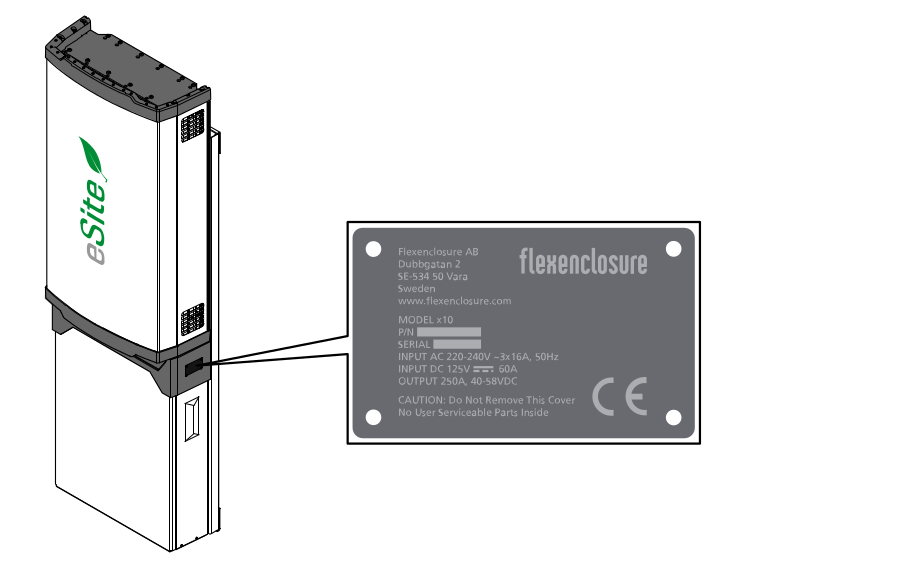
Figure 1.1 Product marking plate - Main Compartment
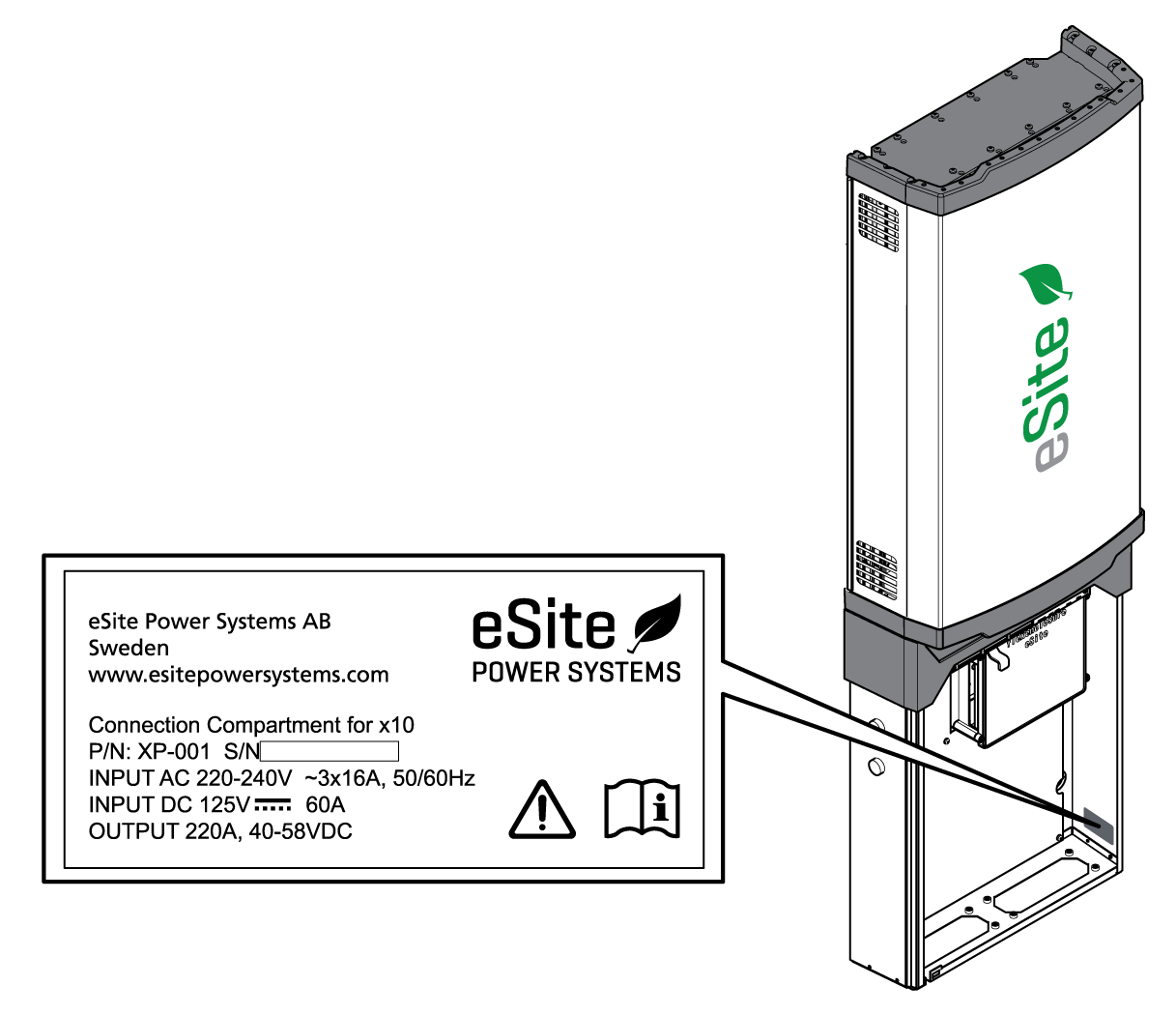
Figure 1.2. Product marking plate - Connection Compartment
1.8 Product numbering
eSite x10 product number (P/N) of the x10 follows the principle:\<Functions>-\<Index>/\<Region> where;
Function: R = Rectifier, S = Solar, I = Inverter, Y = supervision/control generation 1, C = supervision/control generation 2, E = Expansion, X = passive distribution, P = Protection device.
Index: New variants of a base product are indicated by an increased Index, where the first version is 001.
Region: /1 = Europe, Africa and Asia, /2 = North and South America, Caribbean and Mexico, /3 = Australia and Islands in the pacific ocean.
| Product_number | Description | Comment |
|---|---|---|
| RSY-001/1 | Main Compartment with Solar, Rectifier and supervision/control | Used for main compartment starting with serial number 7246xxx |
| RSC-001/1 | Main Compartment with Solar, Rectifier and supervision/control | Used for main compartment starting with serial number 7247xxx |
| RC-001/1 | Main Compartment with Rectifier only and supervision/control | Used for main compartment starting with serial number 7250xxx |
| XP-001 | Connection Compartment | Used for main compartment RSY and RSC. 3 x 125A, 3 x 32A, 3 x 6A. |
| XPE-002 | Connection Compartment for Expansion units | With site load increase (site load = 9 + 9 kW) Same pre-configuration and available options as for PE-001, but with the possibility to connect 9 kW load also to the expansion CC, with the default MCB configuration 3 x 125A, 3 x 32A, 3 x 6A. |
| RE-001/1 | Rectifier Expansion | Mandatory region identifier |
| SE-001/1 | Solar Expansion | Mandatory region identifier |
1.9 Support
eSite Power Systems operate a 'Service Desk & Knowledge Base', where the Customer can access certain documentation, guides and software, report Issues and request support/resolution of reported Issues.
The Customer may access the 'Service Desk & Knowledge Base' by using a user account (provided by the Supplier). The Service Desk is a single point of contact between the Supplier and the Customer and can be found here:
http://servicedesk.esitepowersystems.com
When reporting Issues or requesting support, the Customer is asked to fill in the appropriate form and describe the problem/request in detail. If applicable, photographs and/or log files may be attached to the request.